Plastic bag ban, causal policy analysis using NLP and citizen data
Jakarta banned retailers from distributing single-use plastic bags in 2020. Policymakers needed evidence that the ban worked before extending similar rules to other waste. No earlier quantitative study had used the city's own complaint platforms to measure its effect.
The ban began during COVID-19 lockdowns, which also reduced shopping and waste. A simple before-and-after comparison would confuse the effects. The analysis had to control for mobility, economic activity, seasonal waste, and changes in complaint use.
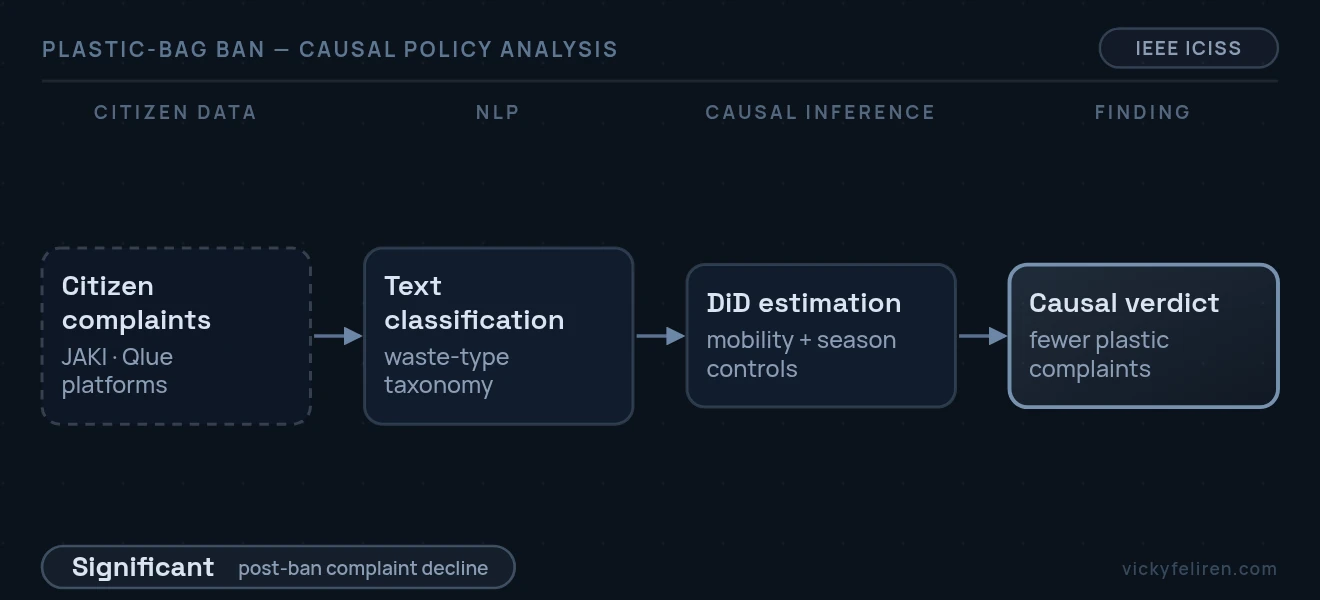
Applied difference-in-differences (DiD) causal inference framework using NLP-classified citizen waste complaints from JAKI (Jakarta's official smart city complaint platform) and Qlue (a civic reporting platform). 100,000+ complaint records classified by waste type using text classification, distinguishing plastic-specific complaints from general waste, sanitation, and other urban service complaints. Plastic-specific complaints serve as the treatment group; non-plastic waste complaints serve as the control group within the same platform and time period.
The analysis controlled for COVID-19 mobility using Google Community Mobility Reports, seasonal waste patterns, and changes in platform use. This separated real waste changes from changes in reporting behaviour.
Identified statistically significant reduction in plastic-specific complaints post-ban-implementation, controlling for pandemic confounders. Pre-registered hypotheses and transparent methodology presented at ICISS 2021.
This was the first quantitative evaluation of the ban using Jakarta's own complaint systems. The method can also test food-container bans, producer responsibility, and other city policies. I presented the work to more than 500 international attendees at IEEE-sponsored ICISS 2021.