Aquaculture pond detection and change analysis
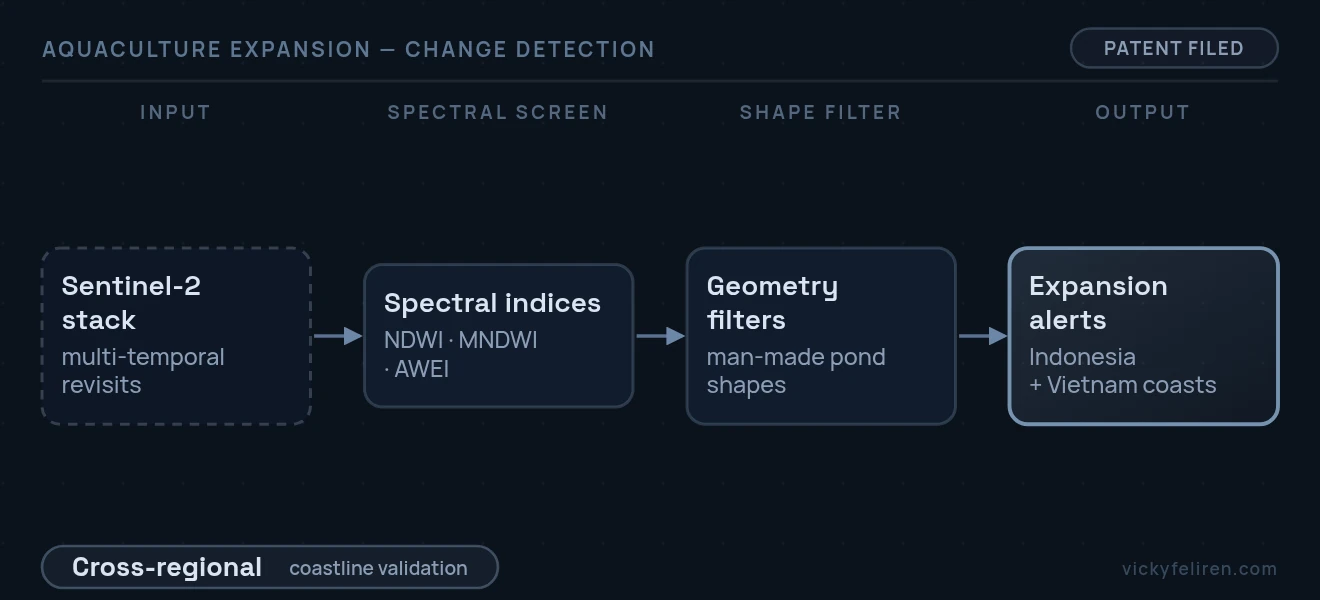
Illegal shrimp and fish ponds are a major cause of mangrove loss along Southeast Asian coasts. Indonesia and Vietnam have lost substantial mangrove cover over the past two decades. Regulators relied on occasional field surveys, so years could pass between new construction and enforcement.
Aquaculture ponds can look like rivers, tidal flats, and estuaries in optical satellite images. Tides make the same place appear as water or land at different times, while tropical clouds obscure single images. The key signal is change over time. A reliable system must compare image stacks to separate stable natural water from newly built ponds.
I built a multi-date Sentinel-2 pipeline with three stages. NDWI, MNDWI, and AWEI first locate possible water bodies. Shape filters then separate rectangular human-made ponds from natural water. Finally, time-based differences identify ponds built within a chosen monitoring period.
I validated the pipeline on the coasts of Sumatra and Kalimantan in Indonesia, and the Mekong Delta and Ca Mau in Vietnam. Their different tidal and spectral conditions tested transfer across regions.
The outputs link pond growth with mangrove loss. They provide spatial evidence for policy reports on illegal coastal conversion.
Governments and NGOs can monitor illegal coastal conversion within hours of a new satellite pass without waiting for field surveys. The alerts support agencies responsible for biodiversity and carbon stocks in Indonesia and Vietnam.